
A day in rural West Bengal
I fell in love with India when I first travelled there in 2011, on my own and excited to explore a new country. I headed to Udaipur and worked for an NGO alongside women artisans creating beautiful textiles. Ever since then, I have continued to travel the country, always learning about the textiles and the culture, while meeting wonderful people.
Last February (2026) I flew into Kolkata, one of my favourite cities in India, and spent a few days in and around the city. One of the days in particular was so special, it reminded me of why I love this work so much.
The day started with a 60-mile drive out to a weaving village in West Bengal, Phulia, now more commonly spelled Fulia. Fulia is known for producing beautiful lightweight woven fabrics. The sounds of looms echo in the streets, it really is something special. Cotton yarns, linens and other natural fibres are all used to create the most beautiful fabrics. The village is known for its expertise in creating Tangail and Jamdani sarees. You can see the beautiful detail in every fabric. There are generations of traditional handloom knowledge among artisans. Fulia became a hub for handloom after Partition, when Tangail refugee weavers settled here and brought their skills with them.
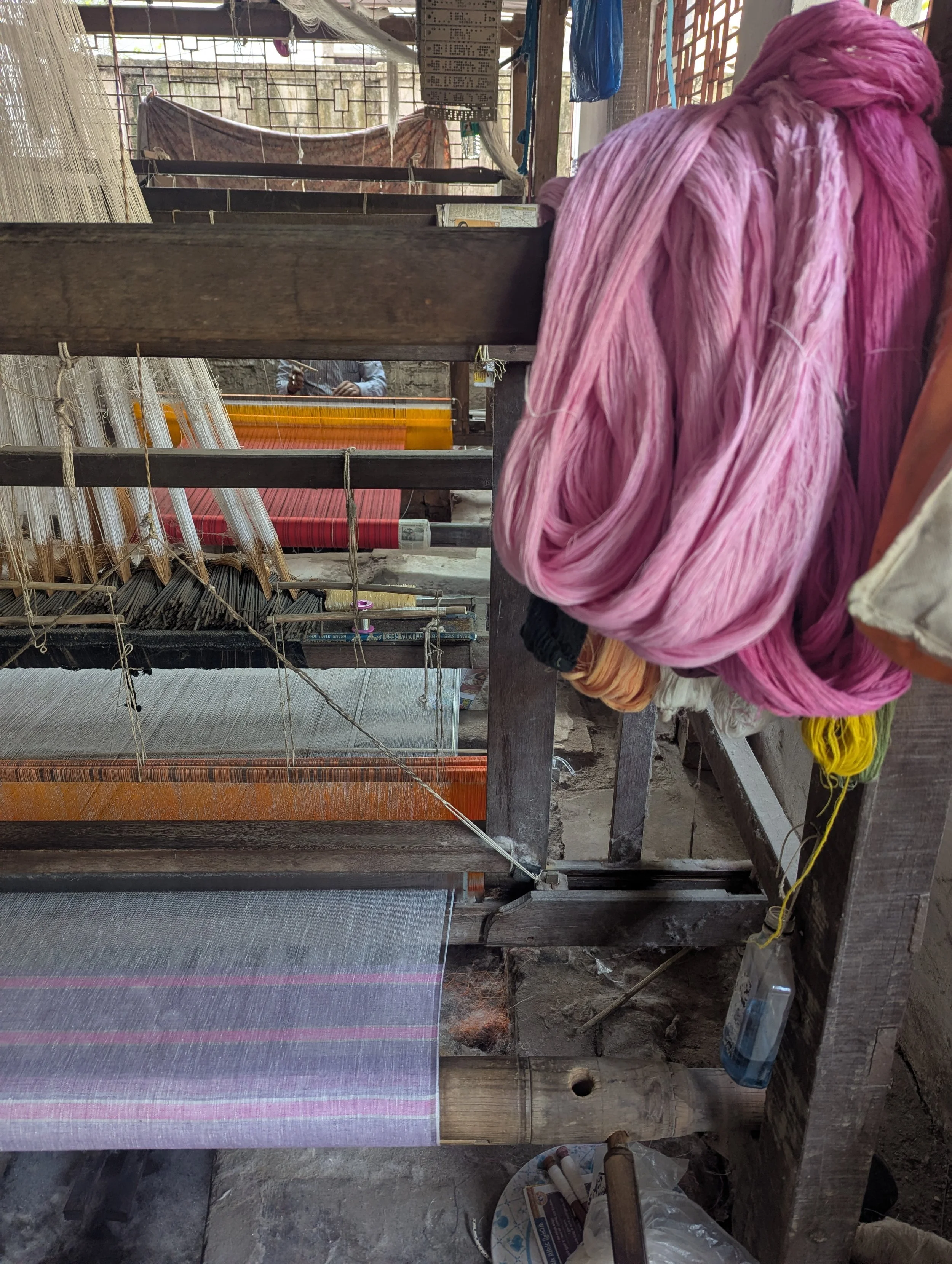
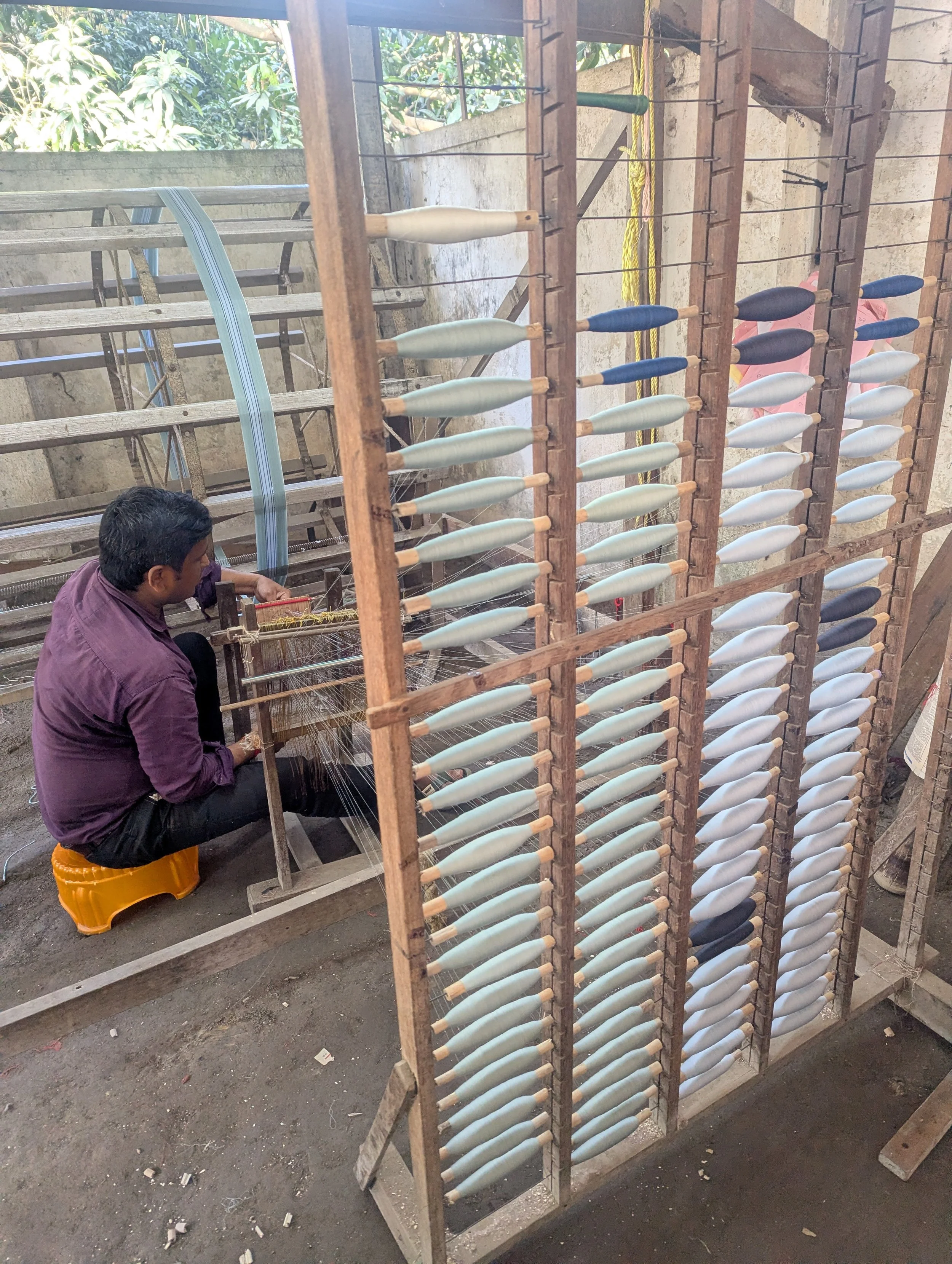
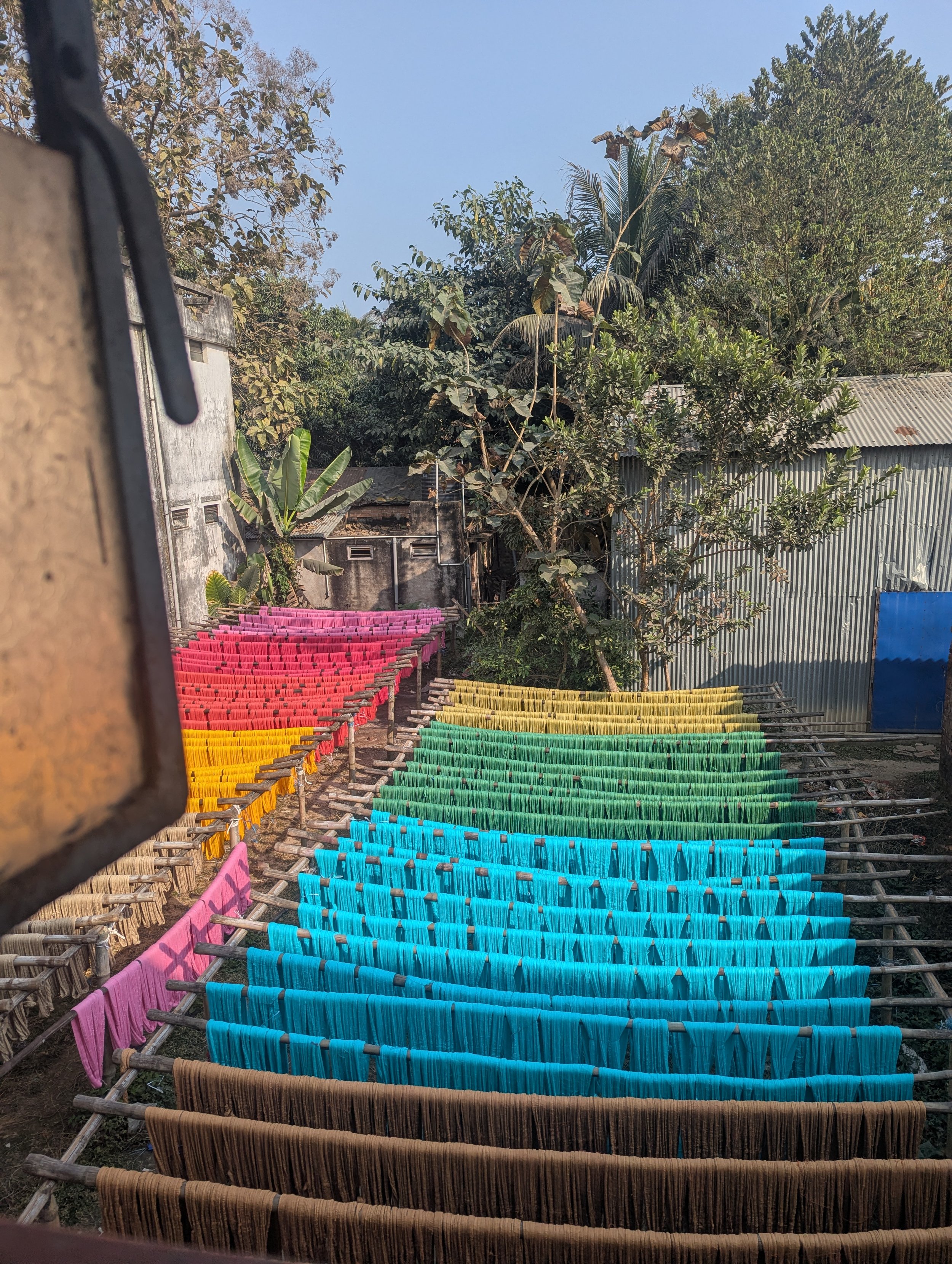
Artisans are often partnered with suppliers, cooperatives or NGOs, who then work directly with buyers. The handloom industry has been gathering more attention lately, which brings me so much joy! But it is definitely not easy for producers, the cost of raw materials and the time required for production can put artisans under real pressure. I'm a big believer in working with handloom fabrics, when you can. When you invest in handloom fabric, you are getting really beautiful quality fabric, as well as having the privilege of working with such a vibrant craft. It brings so much depth to the fabric (in my humble opinion), it really is special.
What's the process? In a nutshell:
Preparing the fibre
separating fibres and straightening them (ginning and carding)
spinning
Getting ready to weave
Dyeing the yarn, when required
Bobbin winding - yarn is added to bobbins using a winding wheel
Warping - setting up the vertical threads for the looms: measuring, arranging and prepping
Loom threading - adding the warp on the loom frame
Weaving begins
Adding the weft (horizontal yarn)
The process of weaving, operating the loom with foot pedals
Finishing, washing and pressing
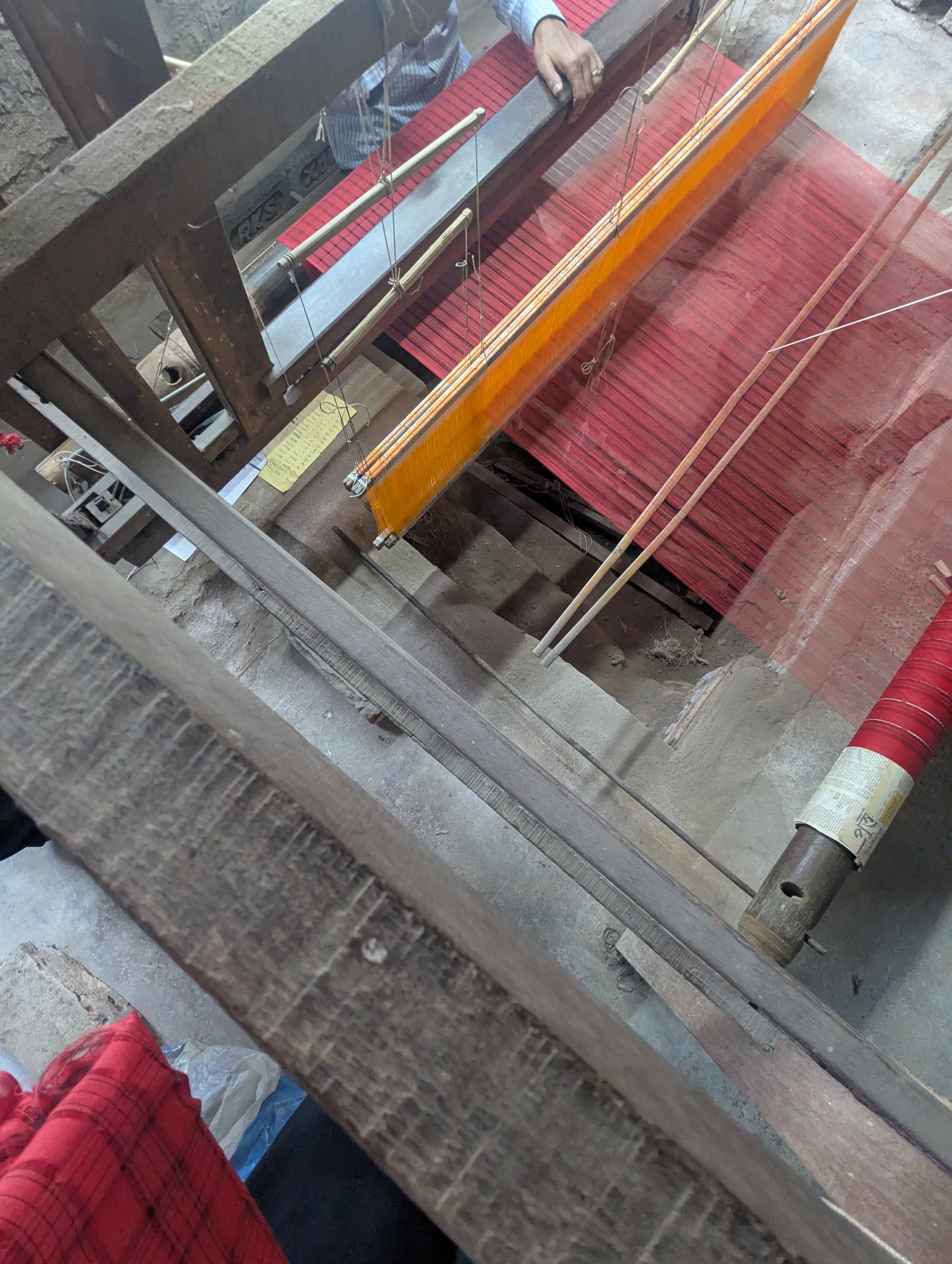
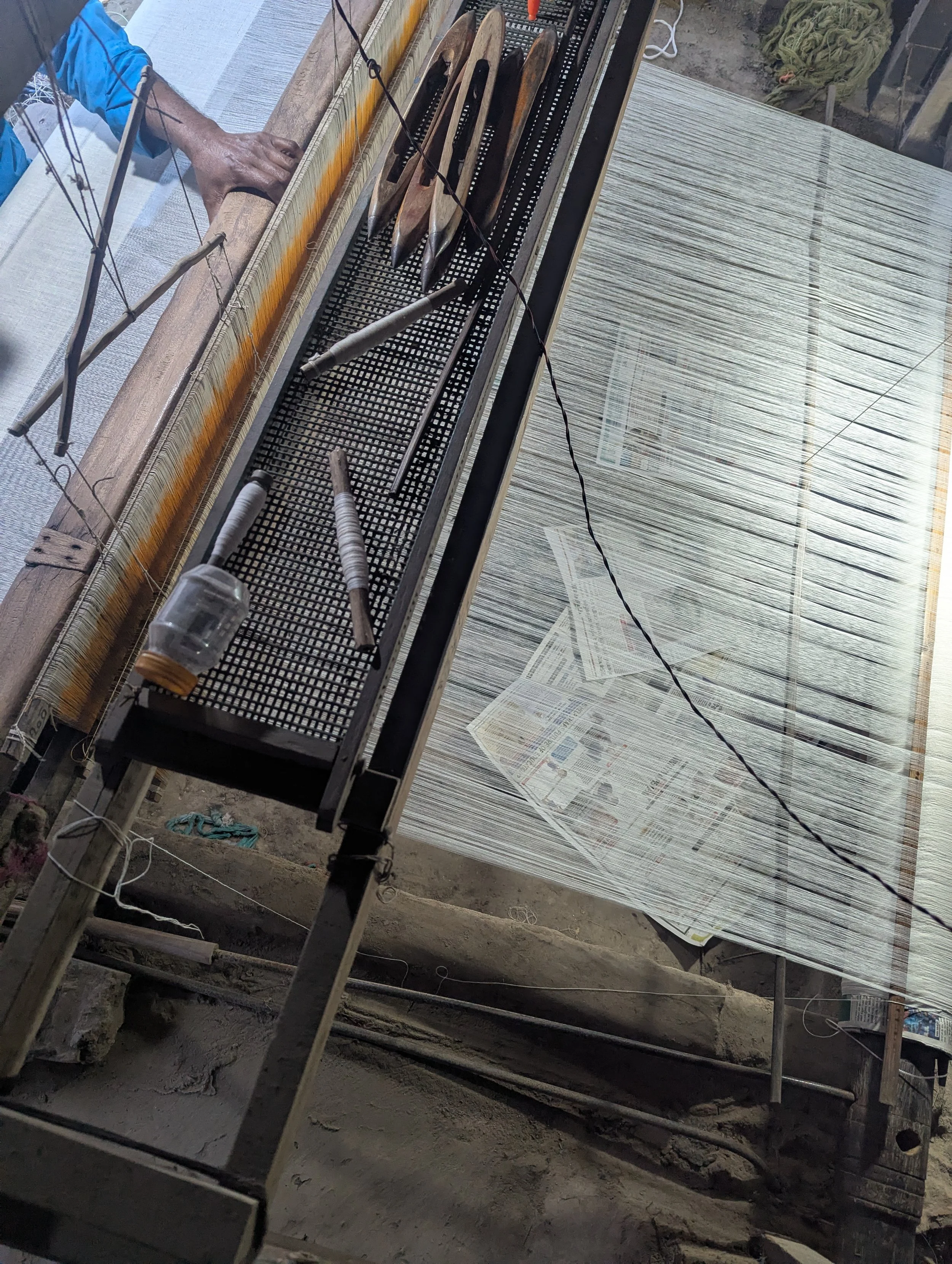
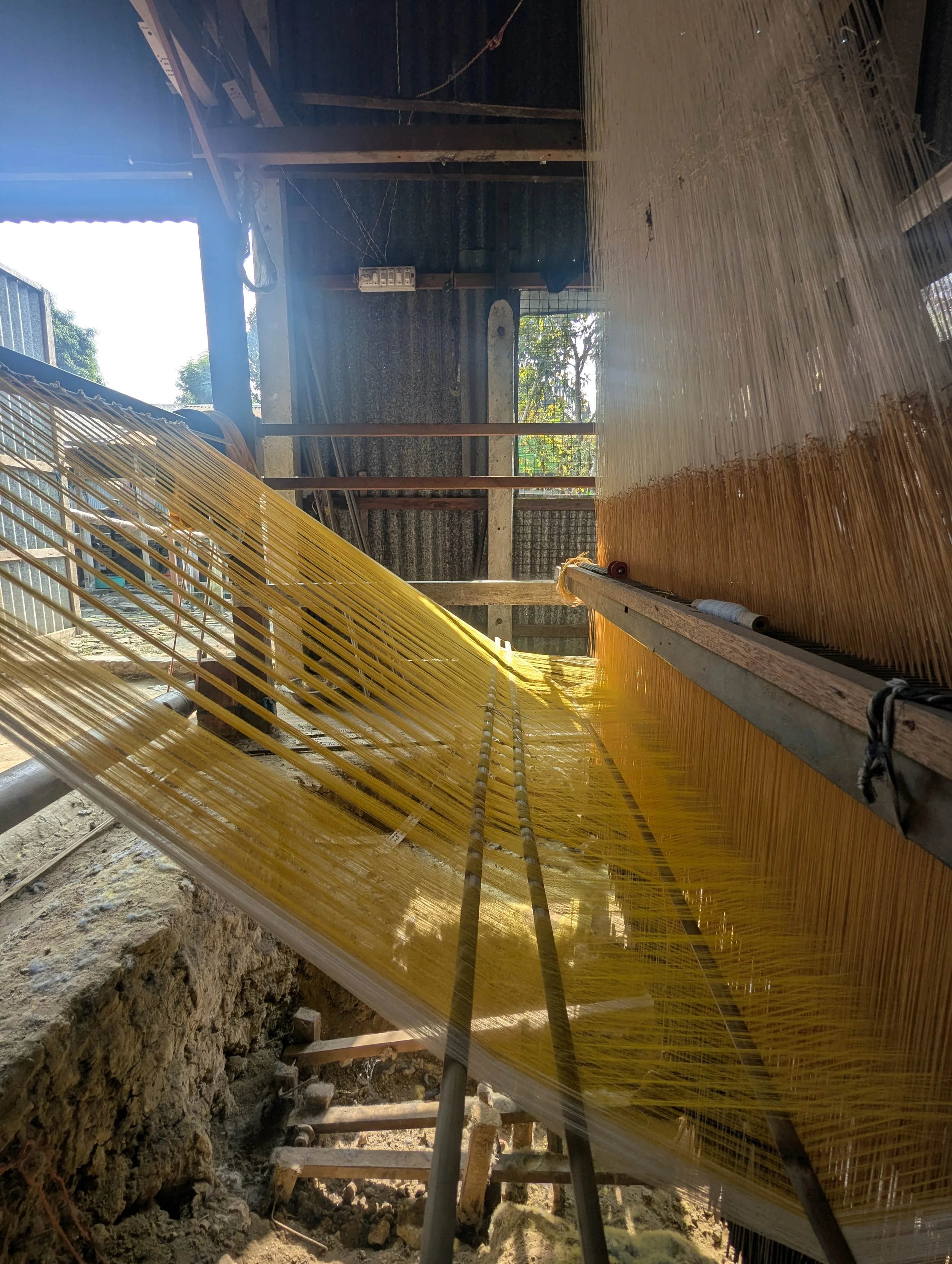
A final quality inspection and you are ready to go - beautiful!
These steps make it sound easy, but it really takes expertise, craftsmanship and skill to create these quality fabrics.
If you want to explore working with handloom cottons or join me on a sourcing trip to India, get in touch to discover more.